Designing Scalable UI/UX Systems for High-Impact Digital Products
A structured exploration of the core principles behind scalable, user-centered UI/UX systems that drive usability, consistency, and product performance.
Resources
Mar 30, 2025

User-Centered Design as a Strategic Foundation
High-performing digital products begin with a structured understanding of user behavior. User-centered design is not simply empathy-driven — it is research-driven and strategically implemented.
This approach involves identifying user motivations, friction points, and contextual behaviors through research, observation, and testing. Insights gathered from real user interactions inform interface structure, navigation logic, and decision pathways.
Designing for real people means reducing complexity, anticipating intent, and aligning product functionality with genuine needs rather than assumptions.
User-centricity is not a feature — it is the foundation of scalable UI/U

Consistency & Structural Simplicity
Consistency is essential for cognitive ease. When visual patterns, interaction behaviors, and navigation structures remain predictable, users spend less time learning the interface and more time achieving their goals.
Structural simplicity does not mean minimalism — it means clarity. Clear typography scales, defined spacing systems, and repeatable component logic reduce friction and improve usability.
Through consistency:
Interfaces feel reliable
Navigation becomes intuitive
Interactions become efficient
Cognitive load decreases
Simplicity in UI/UX is the result of intentional structure, not the absence of design.
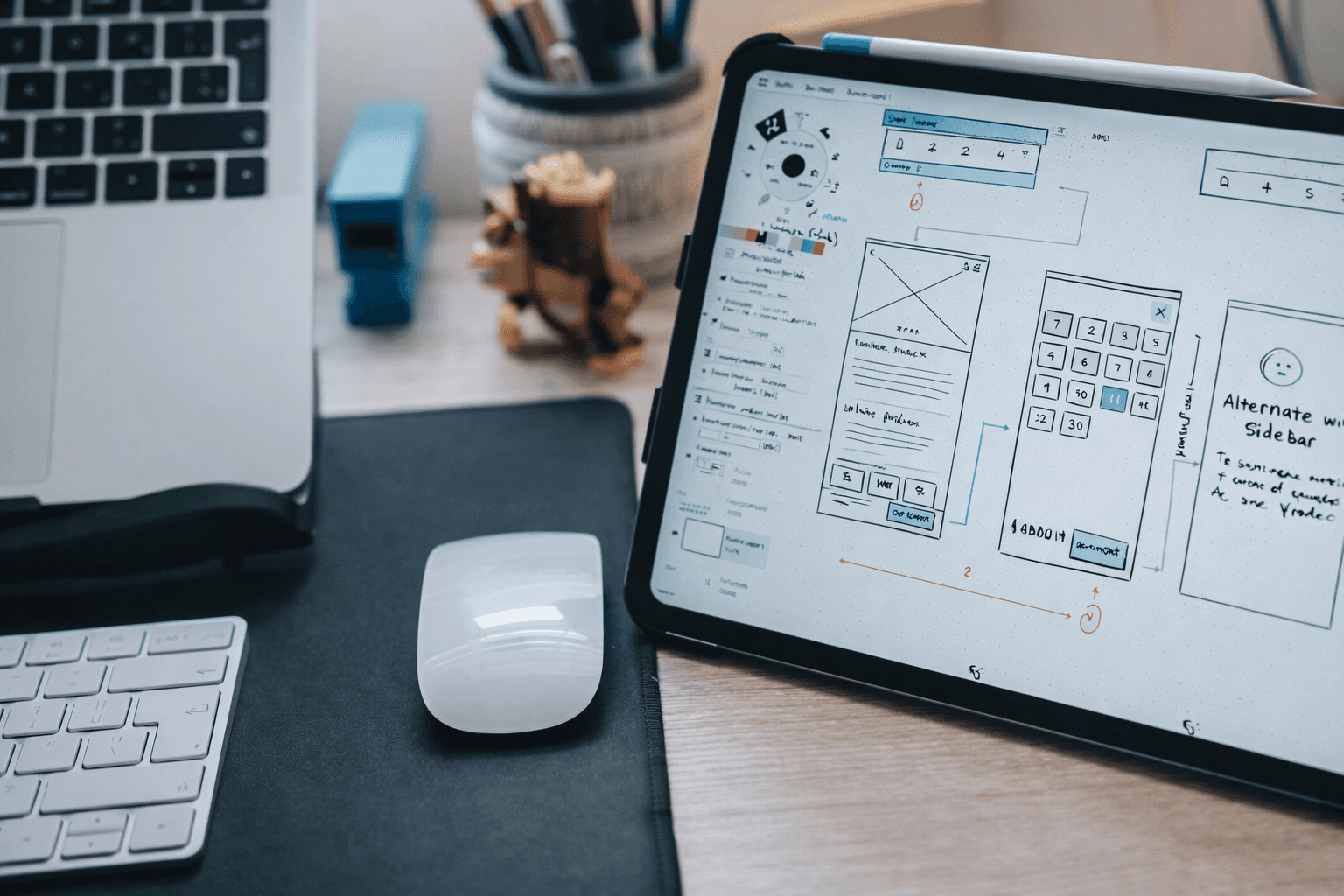
Visual Hierarchy & Guided Interaction
Effective interfaces guide users through content using hierarchy and spatial organization. Layout, contrast, scale, and alignment work together to direct attention and support decision-making.
Well-structured hierarchy:
Emphasizes primary actions
Organizes information logically
Prevents visual overload
Improves task completion rates
Hierarchy transforms static layouts into guided experience .


Innovation Through Interaction Design
As digital products evolve, innovation in UI/UX is driven by meaningful interaction improvements — not novelty alone. Emerging technologies such as AI-driven personalization, adaptive interfaces, and context-aware systems are reshaping how users engage with digital platforms.
However, innovation must remain purposeful. New technologies should enhance clarity, efficiency, and usability rather than introduce unnecessary complexity.
True innovation in UI/UX lies in improving how users move, decide, and interact within a system.

More to Discover


Designing Scalable UI/UX Systems for High-Impact Digital Products
A structured exploration of the core principles behind scalable, user-centered UI/UX systems that drive usability, consistency, and product performance.
Resources
Mar 30, 2025
User-Centered Design as a Strategic Foundation
High-performing digital products begin with a structured understanding of user behavior. User-centered design is not simply empathy-driven — it is research-driven and strategically implemented.
This approach involves identifying user motivations, friction points, and contextual behaviors through research, observation, and testing. Insights gathered from real user interactions inform interface structure, navigation logic, and decision pathways.
Designing for real people means reducing complexity, anticipating intent, and aligning product functionality with genuine needs rather than assumptions.
User-centricity is not a feature — it is the foundation of scalable UI/U
Consistency & Structural Simplicity
Consistency is essential for cognitive ease. When visual patterns, interaction behaviors, and navigation structures remain predictable, users spend less time learning the interface and more time achieving their goals.
Structural simplicity does not mean minimalism — it means clarity. Clear typography scales, defined spacing systems, and repeatable component logic reduce friction and improve usability.
Through consistency:
Interfaces feel reliable
Navigation becomes intuitive
Interactions become efficient
Cognitive load decreases
Simplicity in UI/UX is the result of intentional structure, not the absence of design.
Visual Hierarchy & Guided Interaction
Effective interfaces guide users through content using hierarchy and spatial organization. Layout, contrast, scale, and alignment work together to direct attention and support decision-making.
Well-structured hierarchy:
Emphasizes primary actions
Organizes information logically
Prevents visual overload
Improves task completion rates
Hierarchy transforms static layouts into guided experience .
Innovation Through Interaction Design
As digital products evolve, innovation in UI/UX is driven by meaningful interaction improvements — not novelty alone. Emerging technologies such as AI-driven personalization, adaptive interfaces, and context-aware systems are reshaping how users engage with digital platforms.
However, innovation must remain purposeful. New technologies should enhance clarity, efficiency, and usability rather than introduce unnecessary complexity.
True innovation in UI/UX lies in improving how users move, decide, and interact within a system.
More to Discover
Designing Scalable UI/UX Systems for High-Impact Digital Products
A structured exploration of the core principles behind scalable, user-centered UI/UX systems that drive usability, consistency, and product performance.
Resources
Mar 30, 2025
User-Centered Design as a Strategic Foundation
High-performing digital products begin with a structured understanding of user behavior. User-centered design is not simply empathy-driven — it is research-driven and strategically implemented.
This approach involves identifying user motivations, friction points, and contextual behaviors through research, observation, and testing. Insights gathered from real user interactions inform interface structure, navigation logic, and decision pathways.
Designing for real people means reducing complexity, anticipating intent, and aligning product functionality with genuine needs rather than assumptions.
User-centricity is not a feature — it is the foundation of scalable UI/U
Consistency & Structural Simplicity
Consistency is essential for cognitive ease. When visual patterns, interaction behaviors, and navigation structures remain predictable, users spend less time learning the interface and more time achieving their goals.
Structural simplicity does not mean minimalism — it means clarity. Clear typography scales, defined spacing systems, and repeatable component logic reduce friction and improve usability.
Through consistency:
Interfaces feel reliable
Navigation becomes intuitive
Interactions become efficient
Cognitive load decreases
Simplicity in UI/UX is the result of intentional structure, not the absence of design.
Visual Hierarchy & Guided Interaction
Effective interfaces guide users through content using hierarchy and spatial organization. Layout, contrast, scale, and alignment work together to direct attention and support decision-making.
Well-structured hierarchy:
Emphasizes primary actions
Organizes information logically
Prevents visual overload
Improves task completion rates
Hierarchy transforms static layouts into guided experience .
Innovation Through Interaction Design
As digital products evolve, innovation in UI/UX is driven by meaningful interaction improvements — not novelty alone. Emerging technologies such as AI-driven personalization, adaptive interfaces, and context-aware systems are reshaping how users engage with digital platforms.
However, innovation must remain purposeful. New technologies should enhance clarity, efficiency, and usability rather than introduce unnecessary complexity.
True innovation in UI/UX lies in improving how users move, decide, and interact within a system.